🚉 Newsletter WoR #68: Ruby 4.0 will be released this year, developers are shunning Next.js, a new role in AI, how we code in 2025...
A monthly newsletter about Ruby on Rails and the web
In this issue, we talk about TanStack Start which developers are turning to to as Next.js is getting more complex, we discover a new type face inspired by light rail vehicles, we learn how to have less wordy AI code reviews…
😚 French version (version française)
Web News 🗞️
Okay, we’ve seen this everywhere in November so it’s time for us to bring it up: TanStack Start. This React framework has been here for some time actually but as of today Next.js still has the lion’s share (and they just released their version 16 as explained in this article by Abiola Farounbi). However, Next.js has grown in complexity over the years, going away from the initial simplicity which made it popular in the first place. Tessa Mero shows us how TanStack Start is now attracting those developers disappointed by Next.js.
🤏 News in Brief
This year we’ve heard more and more about the Python package manager uv and Dr. Emily L. Hunt shares her enthusiasm for it.
Angular was becoming the ugly duckling of frameworks but all of this changed since its rebranding. The newly-released version 21 is at the cutting edge thanks to its use of Signals, AI tools and Vite.
If you also never got to finish Advent of Code, this is good news: starting this year there will only be 12 puzzles as opposed to the usual 25.
Ruby and Rails News 🛤️
Ruby 4.0 is going to be released at the end of the year, so that’s the big news.
🤏 News in Brief
A new Ruby podcast just landed on YouTube: Ruby around the World, hosted by Rhiannon Payne. The first video gives you hope if you’re looking for a place to escape the DHH fan club: Japan is the Heart of Ruby, But Feels Far From Rails with OKURA Masafumi, chief organizer of Kaigi on Rails.
Speaking of DHH, a very long article by Filipa Mendonça-Vieira, In Praise of dhh, summarizes how they admired DHH in the past, what he became and what we can imagine for the future, so as to not encourage toxic behavior in the community.
Did you know video games can be made using Ruby thanks to DragonRuby? They’re sponsoring 20 Second Game Jam, which you can join until December 9th.
Thank you for reading our newsletter! Subscribe or share it to join 1,600 curious readers from all over the world who receive the newsletter directly in their email inbox ❤️.
On the Web 🕸️
🚉 Typographic Exploration

If you’re passionate about city walks (or public transport), there’s a chance this article will speak to you. Here we’re looking for the origins of a type face used on displays in the San Francisco light rail system. The author actually made a new font from it: Fran Sans.
✨ Fran Sans Essay - Emily Sneddon
🔎 Learning About a Niche Role
Compiler engineer isn’t very well known so there aren’t a lot of resources to prepare for interviews for that role. This article is here to help!
✨ becoming a compiler engineer - Rona Wang
🏢 The AI role of 2025
We’re still talking jobs but this one is hiring like never before—who said AI was stealing jobs (/s)? We’re talking about forward-deployed engineers (FDE). They bridge the gap between back-end developers and clients in order to tailor AI models to the smallest detail. They’re on site to gather requirements and so they’re are at the heart of the business. If that’s something you think you’d enjoy, take a look!
✨ Forget Data Science—This New AI Role is Exploding with 800% More Postings
Some Code 💻
⌨️ How Do We Code in 2025?
Octoverse 2025 gave a lot of info on how developers code in 2025 by analyzing data from GitHub repos. The article gives a summary of how developer workflow has changed. A more iterative approach can be seen: smaller frequent commits have become the norm, impacting how we test and deploy this code.
✨ What 986 million code pushes say about the developer workflow in 2025 - Cassidy Williams
🪄 CSS Strikes Again

In the series “do we still need JavaScript for this?” a new CSS contender emerged. By using sibling-index() and sibling-count() combined with animations, selecting a card can make neighboring ones disappear. A neat little trick without JavaScript overload.
✨ Staggered Animation with CSS sibling-* Functions - Preethi Sam
👩🏫 Less Verbosity in GitHub Copilot Reviews
Are you tired of a simple “LGTM” in your pull request reviews? On the other hand you can trust GitHub’s Code Review agent to write a lot. But if you want to find a good middle ground, this article explains how you can personalize the file .github/copilot-instructions.md.
✨ How I Taught GitHub Copilot Code Review to Think Like a Maintainer - Angie Jones
Fun 🎉
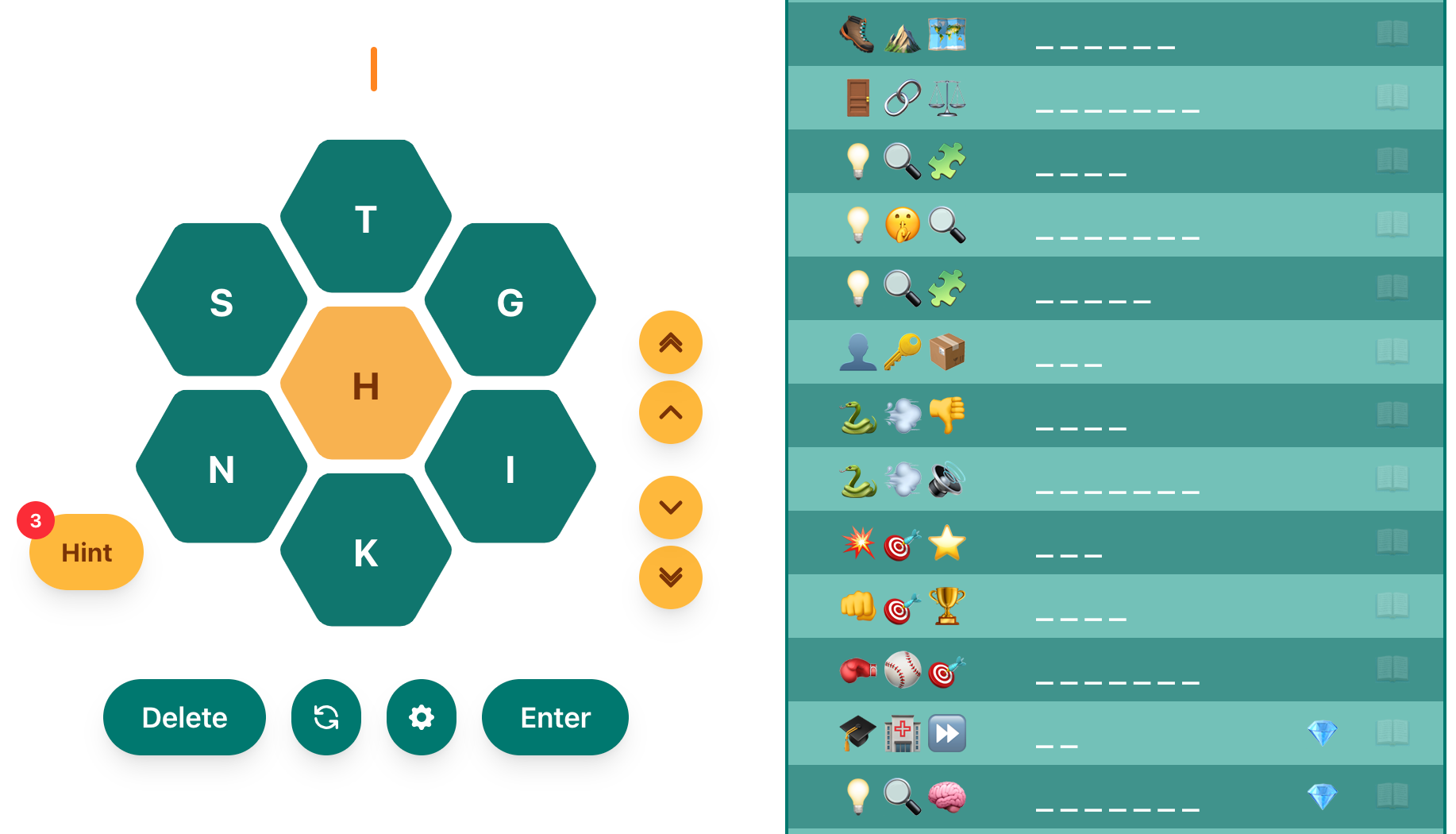
🧩 A New Wordle Entered the Chat
Here’s a game to kill time while your CI runs. You have seven letters available and with the help of three emojis you have to guess what the word is. We’re probably biased because of our love for emojis but we liked the game!
🪦 Developing Empathy for Product Managers
We know developers are not our only readers and there’s bound to be some Product Managers in the audience. For them, this game might just rub salt in the wound. But if you’d like to better understand the various pitfalls PMs have to face, you can play this game and see if you can complete a project…
We’ll be back early January! Because if we send the next newsletter on December 30th, we don’t think many people will be around to read it…
☕ Buy us a coffee to support the newsletter 🍰
✨ Join us: meet-up | twitter | website
Editors: Camille and Juliette
English version: Jade
The mention of uv as a Python package managar really caught my attention. Package managers have become such critical infrastrucure tools but we rarely stop to apreciate how much they've evolved. I've been curious about trying uv after hearng about its speed improvements over pip. Wonder if this signals a broader trend toward rethinking core developer tooling?